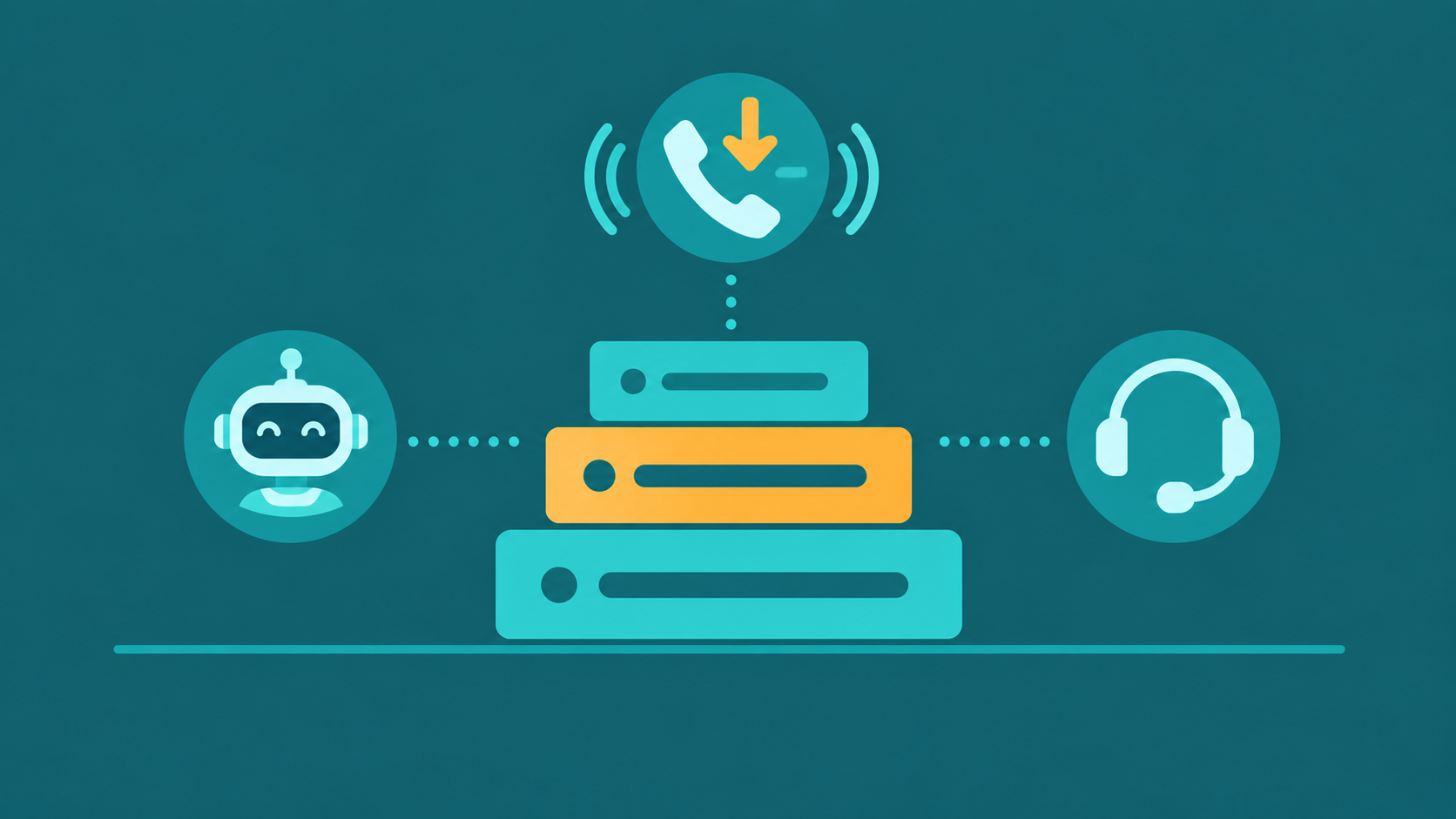

A toll-free number is a phone number that charges the receiving business rather than the calling party. In the US and Canada, toll-free numbers begin with the prefixes 800, 833, 844, 855, 866, 877, or 888. Calls placed to these numbers are free to the caller; the business pays a per-minute or flat-rate charge for inbound calls. They are used by businesses to remove cost barriers for customers calling from fixed or mobile phones.
How toll-free numbers work
When a caller dials a toll-free number, the PSTN routes the call to the RespOrg (Responsible Organization) assigned to that number. The RespOrg controls the routing of toll-free numbers through the SMS/800 database, administered by Somos. The RespOrg assigns the number to a terminating carrier who delivers the call to the business's phone system. The business pays the terminating carrier for inbound call termination; the caller pays nothing. For related context on how direct inward dialing works, see virtual phone numbers.
Toll-free number prefixes
- 800: The original toll-free prefix. Most recognized by consumers; available inventory is largely exhausted, making new 800 numbers difficult to obtain.
- 833, 844, 855, 866, 877, 888: Additional prefixes added by the FCC as 800 numbers became scarce. All function identically from a call routing perspective.
- 822, 880, 881, 882, 883: Reserved by the FCC; not yet assigned for toll-free use.
- 900: Premium-rate numbers — callers pay extra charges. Not toll-free; a separate category entirely.
All assigned toll-free prefixes (800, 833, 844, 855, 866, 877, 888) function identically in terms of call routing and caller experience. The 800 prefix carries the highest brand recognition.
Toll-free numbers vs local DIDs
| Feature | Toll-Free Number | Local DID |
|---|---|---|
| Cost to caller | Free (caller pays nothing) | Varies by calling plan; typically included in mobile plans |
| Area code association | None — no geographic association | Specific area code / region |
| Brand perception | National/enterprise presence | Local presence |
| Portability | Portable across carriers via FCC rules | Portable via LNP |
| Vanity options | Common (e.g. 1-800-FLOWERS) | Less common |
| Best for | National brands, inbound-heavy businesses, support lines | Local businesses, geographic targeting |
Vanity toll-free numbers
Vanity numbers map letters to digits on a standard keypad — for example, 1-800-EASYDIAL maps to a specific 10-digit number using standard letter-to-digit mapping. The FCC regulates vanity assignment: numbers must be available and cannot be reserved speculatively. Check availability through your RespOrg or carrier; popular vanity sequences are frequently already taken. Both the letter version and the numeric version must be registered — callers may dial either form and will reach the same destination.
Toll-free number portability
Under FCC rules, toll-free numbers are portable — you can move a toll-free number from one carrier to another. Portability is managed through the SMS/800 database: transfer requires the current RespOrg to release the number to the new RespOrg. The standard porting timeline is 3–7 business days; configurations involving multiple RespOrgs or complex routing may take longer. For the full porting process including LOA requirements and FOC dates, see the number porting guide.
How to get a toll-free number
- Via your UCaaS or cloud phone provider: Most providers assign 800/833/844 numbers through their platform from available inventory. You select from what is available; provisioning is typically same-day.
- Via a RespOrg directly: For large toll-free number portfolios, some enterprises work directly with RespOrgs to manage number inventory at scale.
- Vanity numbers: Check availability through your provider or directly via the Somos toll-free number lookup at somos.com.
- Cost: Varies by carrier. Typically a monthly number fee plus a per-minute inbound call rate.
Toll-free numbers for contact centers
- National support lines: Customers anywhere in the US or Canada call the same number at no cost, removing a barrier to inbound contact.
- Inbound call tracking: Assigning unique toll-free numbers per marketing channel (TV, print, web) enables per-channel attribution without any changes to your call routing infrastructure.
- High-volume inbound: Toll-free numbers have no CPS (calls per second) limits at the number level. Call handling capacity is determined by your SIP trunking configuration — see SIP trunking for how toll-free calls are delivered over SIP.